Tuesday, August 27, 2013

TOGETHER IN CROATIA AGAIN

After her Mum’s funeral Diane returned to Croatia on 24 July and next day we left Cavtat to start cruising northwards towards Split, where we would meet our friends Frank and Marie.
Our first stop was the stunning anchorage of Sipanska Luka on Sipan Island, where the picturesque village has many old and rustic buildings from Venetian times.

Envoy in Sipanska Luka

 A fine old mansion at Sipanske Luka
Rustic old buildings still in use in Sipanske Luka
 
Locals enjoying BBQ'd fish at Sipanske Luka

Next day we cruised to a quiet bay called Prapratna, on the mainland, where there are a few beach houses and a large camping ground with tents and caravans – in fact almost identical to New Zealand style. Here the beach was pristine as every morning it was raked over and any litter removed.
We used the water maker to top up our supplies from the crystal clear water – with two of us aboard we find that using it for about 5 hours once a week keeps us supplied. Envoy uses more water than most boats with our fresh water flushing of toilets and washing machine (most boats get their laundry done ashore, which is very expensive.)
Prapatna beach


Prapatna camping ground

After four days we arrived back at Lumbarda on Korcula Island – where we were before heading back to New Zealand. Lumbarda is a very ancient settlement dating to the 4th century BC, but sadly there’s no sign of its history nowadays, although it’s a laid-back and nice enough place with free sheltered anchoring all around, and easy access to Korcula town.

Fisherman cleaning fish at Lumbarda

We cruised along the north coats of Korcula directly into a 20 knot north-westerly with 1.5 to 2 metre waves. Once again we were surprised at the ferocity of these relatively small waves, and at 1,570 rpm we were only able to make 4.5 to 5 knots. When we reached the western end of the island and turned to go around the other side, with the wind and seas on Envoy’s stern our speed immediately increased to 6.5 to 7 knots, and we were able to reduce revs to a more normal 1400 and maintain over 6 knots.
That night found Envoy anchored at Tri Luke (meaning three bays) – a great anchorage on Korcula’s SW coast.
As we moved further north we found more yachts, and some of the anchorages more crowded. Just a mile off the SW coast of Hvar Island is the Pakleni Island group consisting of about seven very indented islands, providing many sheltered anchorages. We anchored for one night in Tarsce, which wasn’t over-crowded. I got up about 0500 to check all was OK in the light breeze and found that every boat in the bay was lying correctly to the wind except Envoy which for some reason had drifted upwind and was about to touch a yacht stern-to-stern. I gently prodded the yacht away with the blunt end of a boathook, and waited for a while until Envoy behaved herself and lay correctly with the wind.
We spent two nights anchored off Bobovisce on Brac Island. The village is stunning here but there’s a lot of wasps around – both ashore and on the boat at anchor. So far we’ve found wasps quite prolific around Croatia – much more so than anywhere else, and the Adriatic Pilot mentions that too. On 3 August we went into the Marina Kastela, just out of Split, and named after the nearby small 16th century Gomilica Castle on the water’s edge, which has been continuously inhabited since it was built.
TECHNICAL – nothing to report and apart from general cosmetic maintenance I’ve only changed the generator’s oil after 150 hours running.
ENVOY LOG (to 3/8/13) – Nights aboard and cruised 807 miles for 155 engine hours.

Saturday, August 17, 2013

LAURIE RETURNS TO ENVOY IN CROATIA

Sorry for delay between Blog postings - have been out out internet contact - now will revert to posting every approx 5 days.
Envoy is now at Murter Island, north of Split.
After nearly three weeks back in New Zealand we decided that I should return to Croatia with Diane to follow. The main reasons were the huge marina costs mounting up at Euro 110 (about NZ$185) per day, and the water maker needed to be run - this is hugely important for our cruising, and supposed to be run at least once per week to avoid damage to the membrane (although we’ve heard cases of people leaving them for months without using the special storage chemicals and not having any problems). This is not a job you can get someone else to do without a lot of prior explanation.
This three week period was the longest we’d left Envoy unattended in the water, and when I stepped aboard after the long flight from Auckland, everything was exactly how we’d left it.
By now it was mid-July and very much high season, so the marina was full and a hive of activity. Diane and I had got a bit of a shock arriving back to Auckland’s winter weather, not having experienced it for four years, and it was great to get back into the Croatian summer.
First priority was to install the reconditioned alternator for the SeaPower 115V power supply driven by the Lugger engine. This worked fine so we again have AC power anytime the engine is running, dramatically reducing generator use.
I arranged a mooring in Cavtat, our original Croatian port of entry, where the cost is Euro 28 (about NZ$47) per day, and the marina supplied one of their staff, Harry, as crew for the three hour trip there. I asked Harry about payment and he asked that we send him a New Zealand All Blacks shirt, and although he doesn’t follow rugby he loves to watch the team perform their haka.
Cavtat is a stunning, atmosphere-loaded village with beautiful clear water, and lots of activity as all boats entering Croatia from the south clear-in here. It’s not perfectly sheltered as exposed to the north-west, and the locals said if a NW blow comes it may be a bit uncomfortable, but safe on the mooring. In fact I never had wind much above 10 knots and couldn’t have found a better place to be alone on Envoy for nine days. I wasn’t totally lazy though and re-varnished Envoy’s foredeck bright work with five coats.

Views of Cavtat from Envoy’s mooring


During this time two Kiwi yachts came in and I met both of their crews.
I took the bus into Dubrovnik and rode the spectacular cable car up to the War Museum located in a fortress built by Napoleon, strategically located on top of Mt Srd overlooking Dubrovnik. The Homeland War is very fresh in people’s minds here, and the exhibits don’t mince words when describing the aggression of the Serbs and Montenegrins. The Croatians were vastly outnumbered and poorly equipped but doggedly held this fortress against shelling, bombing and infantry attacks. There is sobering video footage of the bombing and shelling of Dubrovnik, leaving you wondering what the purpose was of attacking such an historic UNESCO-listed city that contained only residents and refugees and no military targets. Over 2,000 shells were fired at Dubrovnik damaging 70% of its 824 buildings, gutting nine historic palaces and together with sniper fire killing 250 people.

TECHNICAL – SeaPower alternator – see above.
The water maker worked fine after three weeks non-use, and without pickling.
Chris – I fitted the new back plate for the guest head switch, and the gasket for the cockpit storage box – thanks.


Saturday, August 03, 2013

AN UNPLANNED RETURN TO NEW ZEALAND

Envoy is now at Split.
Our next stop heading north from Dubrovnik was Nature Park Lastovo Archipeligo, consisting of one island about five miles long, and numerous smaller islands.

This unusual lighthouse marks the eastern-most point of the Lastovo Archipeligo

First we anchored in a bay on the southern coast called Skrivena Luka, which is almost perfectly sheltered, but doesn’t have anything special to offer. In the early evening a boat came alongside with park rangers collecting anchoring fees of 25 Kuna (about NZ$6) each. Next day we moved to the northern side and anchored in another very sheltered, small, and more interesting bay called Zaklopatica.

Envoy anchored in Zaklopatica

From here we walked about 3km uphill to the medieval village of Lastovo - this was delightful with a relaxed atmosphere, more residents going about their daily business than tourists and some very interesting ancient buildings, including a small church dating from the 16th century.

View of Lastovo with obligatory hill-top fortress ruins

Houses in Lastovo are noted for their unusual chimneys as shown in this picture (centre), designed to dissipate smoke in very windy conditions

That evening some park rangers came alongside, and I explained that we’d already paid yesterday and showed them the tickets. They told us the charge is daily, not one-off, but nevertheless let us off, saying if we’re still here tomorrow we’d have to pay the grand sum of 25 kuna again. We wished we had stayed … read on.
Next port of call was a village with the unpronounceable name of Brna on Korcula island. Korcula is one of the most popular, picturesque and historic areas of the Dalmatian Adriatic. Although it is not certain, the legendary 13th century explorer, Marco Polo, is reputed to have been born here. There is also a link with another legend, James Bond. A Scottish adventurer, soldier, writer and politician, Fitzroy Maclean, owned a house in Korcula before WW2, and during the war carried out several daring missions with the SAS in this area, as well as handling negotiations between the British Government and partisan leader Tito. Some of his exploits are said to have inspired Ian Fleming’s stories of James Bond.
Like many parts of Croatia olives are grown on Korcula. I thought there were only a few varieties of olives – mostly just black or green, but there are over 40 varieties grown here, of which the most common is the oblica.
But today was not going to be a good introduction to Korcula. Unlike other bays we had anchored in Brna is a proper harbour with jetties for fishing boats and ferries. In the early evening a small boat came alongside and a harbourmaster told us the cost to anchor here was 336 kuna (about NZ$75). He must have seen the shocked look on my face because he pulled out some English language documentation and a price list to explain the charge of 24 kuna per metre, so we either had to pay or move. He did offer us the chance to anchor in a nearby bay for half price, but it was getting late and our anchor was well set so we elected to stay. Now we knew why we were the only boat anchored there!
Other cruisers had warned us about Croatian anchoring fees, but this was the first (and we hope the last) experience of feeling the charge was totally outrageous.

Envoy expensively anchored in Brna

Laurie in RHIB coming in to meet Di and pick up groceries at Brna

The next day we were determined to find a free anchorage again and headed to the eastern end of the island to anchor near the village of Lumbarda, well-sheltered by surrounding islands. Here was a great free anchorage, which also has reasonable access to Korcula town where we planned to visit the next day.
Late the next morning however we got a call from New Zealand advising Diane’s 90 year-old Mum was rapidly fading, and we decided to head back to New Zealand. We were surprised how quickly we were able to organise our return, making a seven hour cruise back to Dubrovnik marina while Diane booked our flights on-line. This marina is one of Croatia’s most popular and heavily booked in what was now high season. Our agent, BWA Yachting, went to see the marina management to explain our circumstances and half way back to Dubrovnik we received confirmation of our berth, albeit at a horrible cost of 110 Euro (about NZ$185) per night.
Entering the marina we saw a silver fern flag flying from a yacht, which turned out to be owned by Simon Penlington, someone we know from Auckland.
We decided to turn off our refrigeration while away, and gave the contents of our fridge to Simon. Then we went to a nearby restaurant, explained our circumstances to the manager and asked if they could store our frozen food in their freezer. Although he declined, one of the waiters offered to store it in his freezer at home, earning himself a huge hug and kiss from Di.
We also had to find someone to be responsible for Envoy during our absence, and the marina’s head marinara, a qualified captain, agreed to do this for a fee of Euro 100 (about NZ$167).
Next morning we shut down everything aboard Envoy and left the marina by 10am for the long trip back.

TECHNICAL - nothing to report
ENVOY LOG – up to 22/6/13 we had spent 87 days aboard and cruised 656 miles for 126 engine hours.


Saturday, July 27, 2013

SOUTHERN CROATIAN ISLANDS

Envoy is currently in Zuljana on the Croatian mainland north of Dubrovnik.

SOUTHERN CROATIAN ISLANDS
While the SeaPower alternator was being repaired we left Dubrovnik to visit some of Croatia’s southern islands.
A general impression is that the islands are fertile and lush with vegetation, have some great beaches, are not over-crowded (at this stage in mid-June anyway), and have picturesque small villages with plenty of interesting older buildings from Venetian times, although the later buildings have more of a European style about them than the postcard-friendly Greek buildings. The islands have been occupied since ancient times with successive inhabitants building fortifications against invaders and pirates.
First stop was Lopud with an excellent anchorage off a beautiful sandy beach.
This is one of the Elaphite group of islands, named after Greek elafos, meaning deer, although there are none to be found these days.

Envoy with other boats anchored in Lopud


We walked 2km across the island to the main town of Uvala Lopud to find a quaint village where there used to be a thriving community of several thousand (the island boasted 30 churches in the 16th century) based on fishing and coral harvesting.

By late afternoon the tourists had left our beach to walk back to their hotela at Uvala Lopud, and we had a swim in solitude in the crystal clear water, followed by a refreshing ale from a taverna.
Next day found us moored stern-to the old stone jetty in the small village of Okulje on Mljet island. This is a very small bay almost perfectly protected, and mooring is free if you eat at the nearby taverna.
Envoy stern-to quay in very-protected Okulje
This photo shows how small and sheltered Okulje is
 
 
This would have been idyllic but unfortunately spoiled by large amounts of floating litter. Today was our wedding anniversary so a perfect occasion to eat ashore, and we found the food basic but adequate and very reasonable at Kuna 155 (about NZ$34) for a full meal including some vin ordinaire.

Hand made wooden lobster pots

Here we met some Australians, Col and Pam Darling, cruising aboard their Lagoon 440 catamaran named “Finally My Darling” – the only boat we’ve come across so far carrying its own aircraft. Col is a pilot and has an Airborne XT582 Microlite powered with a 65hp engine and equipped with floats so it takes off and lands in the water.

Powered Microlite carried aboard Lagoon 440

Moving on to another bay on Mljet, Luka Polace, we found another perfect anchorage surrounded by forest and with a small village built around the ruins of a 2nd century Roman fortified palace (hence the name “Polace”).

Ruins of 2nd century Roman palace

Homer visited Mljet and wrote about this island, as did Apostle Paul, so we were in good company.

This fur-lined motor scooter with rabbit ears was for hire in Polace

We met up with some Australians, Kevin and Mae, who we’d met in Marmaris about three seasons ago, and had evening drinks aboard their yacht, Whisper.
Then to cap it off we again met New Zealanders Alistair and Viv from Largo Star, and had a great dinner ashore at a taverna where the specialty was various fish and meats baked under a large metal bell – delicious and tender.
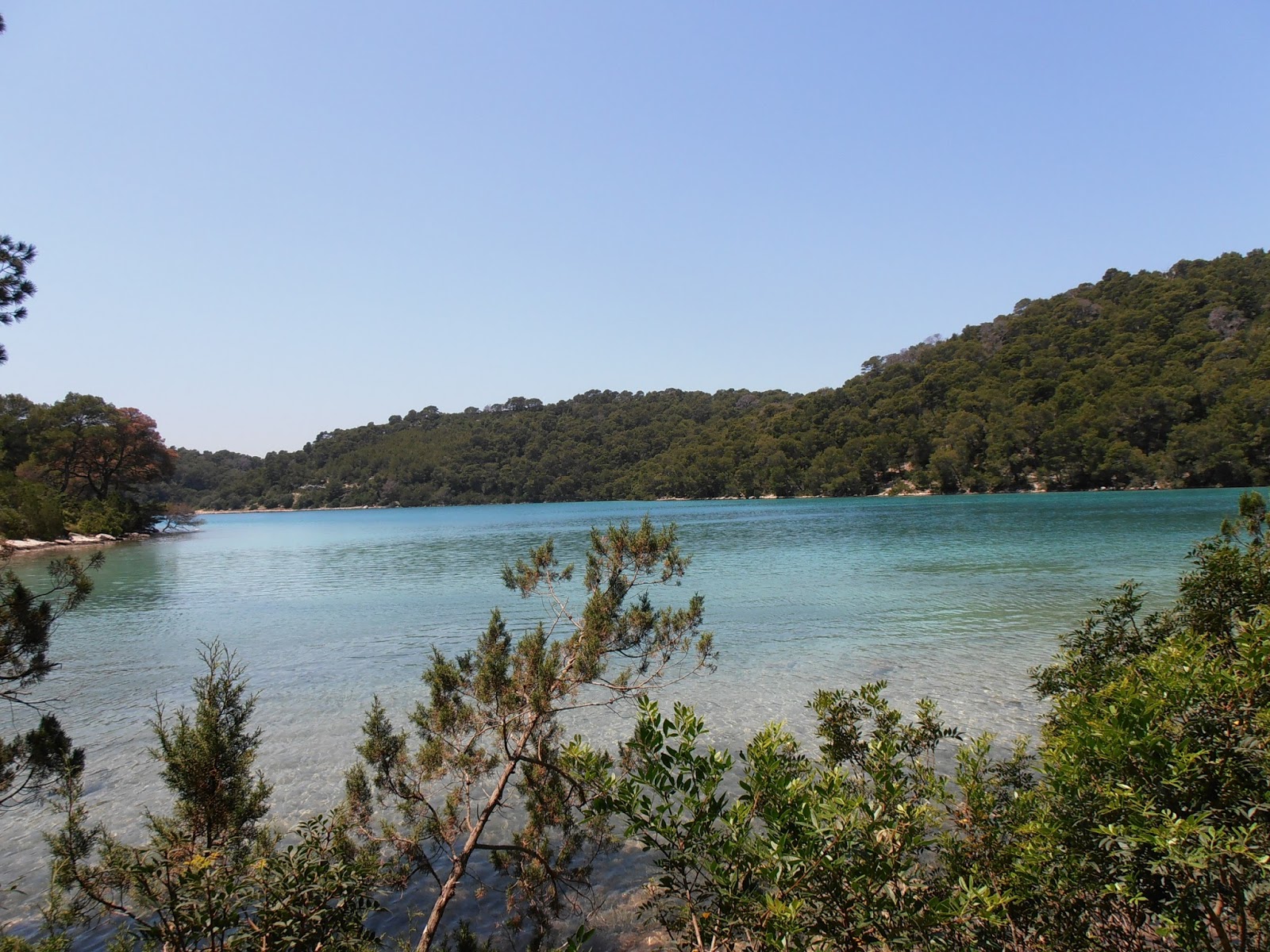
Luka Polace is one of the entry points to the National Park Mljet, and we spent most of a day exploring it. The park is beautiful with unspoiled lush forests of Aleppo pine, some lakes and an island monastery accessed by ferry. Most people were hugely impressed, but it was a bit different for us, coming from New Zealand where this type of scenery is common place.

Typical scene in Mljet National Park

TECHNICAL – nothing to report
ENVOY LOG – up to 16/6/13 we had spent 80 days aboard and cruised 543 miles for 105 engine hours.


Monday, July 15, 2013

SMALL FIRE IN ENVOY’S ENGINE ROOM GIVES US A FRIGHT

Envoy is currently in Dubrovnik Marina.

This unusual cruise ship was anchored off Dubrovnik

Dubrovnik from the sea as Envoy cruises past

This reproduced galleon takes tourists sightseeing


We left our mooring in Uvala Tiha in perfect conditions to cruise around the nearby Elaphite Islands, but we were only about 15 minutes into our trip when we both heard an unusual rattling noise from the engine room. I say “both” because sometimes it’s easy to imagine you hear some different sound, but there was no doubting this one. I stopped the engine to look for a cause but could find nothing, and when I re-started the engine the noise seemed to have gone – all good! A few minutes later I heard the urgent beep of the engine room smoke detector, and on poking my head into the engine room could definitely smell something different – just a hot smell. I grabbed our infra-red pyrometer to check temperatures in different areas of the engine room and found the Seapower alternator’s case reading about 105dC whereas it normally reads about 65dC. I came up to the pilothouse and shut the Seapower down – that means I stopped it producing power, although since the unit is engine-driven by vee belts it was still turning over. Then the smoke alarm sounded again and I rushed back to the engine room to see flames in the entrance way. I quickly determined that what was on fire was a hat that I leave in the engine room and wear to protect my head from bumps in the restricted engine room space. I grabbed the hat and snuffed the flames out, then peered into the engine room to see if there were more flames – fortunately there weren’t. What had happened was the Seapower alternator was emitting hot sparks (actually pieces of red-hot metal) and one of them landed on the hat, setting it alight.

We quickly shut down the main engine to stop the Seapower alternator from turning, started the Yanmar wing engine to get us moving again and headed for a sheltered bay on nearby Kolocep Island. There I was able to remove the vee belts and isolate the alternator. After that I checked the alternator, finding that the drive pulley would hardly turn at all – indicating failed bearings. I have to say the incident was a bit scary, and later a couple of strong rums and coke were called for.

What the Seapower alternator does is enable the main engine to deliver 115 volts AC current through a special in-line inverter, so that we can run the refrigerator / freezer while under-way. Without it, we have to run our generator to produce 115 volts AC.

The next day we returned to Dubrovnik Marina to remove the alternator and get it checked, and it has since been repaired at a cost of 600 Euros (about NZ$1,000) and awaits re-installation. In analyzing this problem, it’s at least nine years since the alternator was serviced, and this is too long – in future we’ll disassemble and check it every four or five years.

TECHNICAL – see above

Sunday, July 07, 2013

CRUISING NORTH TO CROATIA

Envoy is still in Dubrovnik Marina, Croatia.

I forgot to mention that in this area you see quite a few structures with bullet holes left over from what the locals call the "Homelands War".

Laurie points out what we believe are bullet holes in stone walls of an old shed

As we left the Gulf of Kotor we saw another Kiwi boat, Largo Star. Our friend Brooke Archbold knows these people well, and before we started our first cruise he suggested keeping a lookout for them. I remember thinking at that time the Med’s a very big place so that’s a long shot, but so far we’ve seen Largo Star once each year for the last three – in Turkey, Greece and now Montenegro, and I’m sure we’ll meet up with them in Croatia as they’re following us in a few days.
Croatia’s southern entry port of Cavtat is only about 25 miles north of Montenegro, and we were surprised to see several bird “work-ups” along the route, signifying fish activity – bait fish on the surface and larger fish cruising below. Although these work-ups are common home in New Zealand waters they’re rare in the Med.

Seabird "work-up" in Adriatic Sea

In Cavtat we used an agency, BWA Yachting, to organise our clearing-in, taking only about 30 minutes. The formalities seem less onerous here and when moving around there is no requirement to report to authorities. Only when visitors join or leave the vessel is there a requirement to submit a new crew list to the nearest harbourmaster.

Laurie on waterfront at Croatia port-of-entry Cavtat

We bought our Vignette (cruising permit) for Envoy and one for the tender, and these together with Sojourn Tax cost 2,885 Kuna (about NZ$640) for three months.

Adjacent to Cavtat is a great sheltered bay nearby called Uvala Tiha, from where we could see Dubrovnik just five miles away. Here we had our first experience of paying for a mooring. A small boat came out to us and the occupants told us very politely that we could either anchor or use one of their moorings, but in either case the cost was 140 Kuna (about NZ$31) for the night, or the same total cost for as long as we wanted to stay. This seemed reasonable enough and I checked out the mooring and found it to be OK.

While it took us a while to warm to Montenegro we liked Croatia immediately, and Cavtat is a very atmospheric village with mostly friendly and helpful people.
Communications are important to us, so the first day in Croatia we took a 45 minute bus trip to Dubrovnik to get a Croatian SIM card for the phone and a Mobile Broadband for internet access. The Broadband worked fine on my laptop and on the iPad, but not on Di’s computer. We were given the name of a computer service specialist, and he spent a free half hour trying to sort out the issue, concluding it’s the Microsoft Vista program in Di’s computer, and we ended up buying a separate USB which works fine.
We were able to leave Envoy on the mooring and visit Dubrovnik by bus. By now we’ve see more than our share of medieval walled-towns, but Dubrovnik is absolutely stunning – one of those must-see places, despite the crowds. The fortifications look formidable and the streets open up into beautiful courtyards. Narrow lanes with interesting tavernas and restaurants run off the main streets, and the place has a real “buzz’ about it.

Entrance to Dubrovnik's walled Old-Town

Dubrovnik has several squares ringed with stunning architecture

Dubrovnik's cobbled lanes drool with atmosphere

The next photo is here in error, and should be on the next posting. On the nearby island of Kolocep this is a defensive tower used in the Middle Ages as a refuge from marauding pirates. Pirates were a constant problem in those times throughout the Med

 We stayed four nights in Cavtat and then headed off to the Elaphite Islands – but we didn’t get far – read about it in the next post!

TECHNICAL – nothing to report


Thursday, June 27, 2013

SUMMARY OF MONTENEGRO

Envoy is currently in ACI Marina Dubrovnik, Croatia.
Cruisers generally talk about Montenegro being expensive to visit but this is not really so. The Vignette (cruising permit) costs 125 Euro (about NZ$208) for one week – so that is expensive, but it only increases to 225 Euro (about NZ$375) for a month and 405 Euro (about NZ$675) for three months, although it’s hard to see why you’d want to stay more than a month in Montenegro as the total coastline is only 45 miles long (plus the Gulf of Kotor) and there’s only about a dozen locations for the cruiser to visit.

Apart from the Vignette everything is super-cheap. For example:
- The excellent local lager beer is called Niksicko and costs about 1.20 Euro (about NZ$2.00) for a large glass. The New Zealand wine industry was started by “Dalmatians” from this general area, and their wine is excellent to taste and a fraction of the price in New Zealand – we were buying 500ml bottles for around 4.50 Euro (about NZ$7.50).
- For breakfast at a very good taverna we could have Eggs Benedict with smoked salmon for 6 Euro (about NZ$10.00) or a Full English Breakfast of two eggs, bacon, mushrooms, sausages, beans, tomatoes and French fries for 4 Euro (about NZ$6.70).
- Shopping in the fresh food markets we find the prices very reasonable. We bought a selection of potatoes, asparagus, carrots, beans, lettuce, avocadoes, kiwifruit, strawberries, bananas, mint, parsley for 21 Euro (about NZ$35) and Diane says this would have cost about $50 in New Zealand. A whole salami cost 4 Euro (about NZ$6.70) and a litre of olive oil 7 Euro (about NZ$11.70).
- I got a haircut for 4 Euro (about NZ$6.70). Admittedly I don’t have much hair to cut, but in New Zealand get charged $10 to $15.

This market was only a few metres from Envoy's berth

And included a beautiful flower market

The main gate of Kotor's walled city is adjacent to the market

Our purchases from the market on Envoy's dinette table

We met some British cruisers who’d had a bad experience at a village called Risan in the Gulf of Kotor. They were moored alongside the town jetty overnight and awoke in the early hours of the morning to a loud bang. Some idiot had cast their mooring lines from the jetty leaving their boat to drift across the bay until it hit an anchored vessel. Little damage was done but it could have been a very serious situation. A few days later we visited Risan finding it has little to offer.

One morning we awoke to find this traditional sailing vessel alongside

We spent 16 days in Montenegro and it rained all but one of them, ranging from light showers to torrential rain with thunder, but overall we had a great time and particularly enjoyed anchoring in Bogova and mooring to the town quay in Kotor.
Another excellent reason to visit here is you can buy duty-free fuel on the day you leave (provided that you have a ship’s rubber stamp), and we bought our estimated year’s requirement of about 1,600 litres for 0.73 Euro (about NZ$1.22) per litre whereas the usual price is 1.22 Euro (about NZ$2.03) per litre. A large Italian motor yacht was fuelling next to us, buying an incredible 70,000 litres for a cost of 51,100 Euro (about NZ$85,800) – a good argument against large planing vessels.

This Italian motor yacht loaded 70,000 litres of diesel

The last time we bought fuel was 800 litres last August at NZ$2.76 per litre, and fuel we purchased during 2012 in Greece averaged 1.61 Euro per litre. That is NZ$2.68 per litre or 6.12 Euro per US gal or approx US$8.13 per US gal. Turkish prices are very similar.
It’s difficult to be specific about Envoy’s fuel economy as the diesel we buy is used in the Lugger, our NL 8kw genset (which probably uses about 3 litres/hour) and our Yanmar wing engine once a week or so. We estimate the Lugger averages about six litres per hour.
The most reliable info is that on the North Atlantic Rally the Nordhavn 46s reportedly cruised at an average of 6.3 knots and averaged 1.3 litres per nm, which is about 2.92 nm per gal. Patrick of Nordhavn 46, Frog Kiss, reports using two US gal per hour at 1,650 rpm for 6.2 knots – that is 3.1 nm per gal if my math is correct.
Anyway one thing’s for sure – with a Nordhavn 46 your annual fuel bill is not a major consideration in the scheme of things.

TECHNICAL – nothing to report


Wednesday, June 19, 2013

THE THINGS YOU REGRET ARE THE THINGS YOU DIDN’T DO

Envoy is currently at Polace, Mljet Island, Croatia

THE THINGS YOU REGRET ARE THE THINGS YOU DIDN’T DO - These are the banner words of Kadey-Krogen Yachts’ advertisement in Passagemaker magazine, along with “Working hard is one thing, living your life to the full is another. You get only so many spins around the sun – what will you do with yours?”
I was pretty impressed with this, and thought it nicely summed up why Diane and I are cruising at this stage of our lives. Of course your dream doesn’t have to be living on a boat, but whatever your dream is – do it, because your clock is ticking … tick, tock, tick, tock, get the picture? (quoting noted cruiser, Scott Flanders)

MORE ON MONTENEGRO
One of the rusting warships mentioned in the last posting

Kotor is a stunning medieval town where we spent four nights with Kevin and Diane moored to the town quay, waiting for stormy weather to pass.

Envoy moored stern-to in Kotor

Kotor has been fortified since ancient times but owes much of its present form to the Venetians. Extensive fortifications include a wall that stretches high into the hills behind the town, and we walked to the upper fortress for incredible views of Kotor and the Gulf.

The Venetian winged lion symbol is common throughout areas of the Med they formerly controlled

The Gulf of Kotor viewed from the upper Castel of St John. Envoy moored below

 
It takes nearly an hour to reach the upper fortifications up a steep winding track

The flag of Montenegro is a particularly attractive, but one that not many would recognise

Kevin’s birthday coincided with Kevin and Diane’s last night with us so we had a great last dinner together before they caught the bus to Dubrovnik the next day.

Kotor street scene

TECHNICAL - for the whole time we’ve owned Envoy, once in a while the Lugger doesn’t start first turn of the key, and this has happened twice so far this year. The cause is a sticking starter solenoid, and all we need to do is tap the solenoid with a plastic mallet, and then she starts. Reminds me of my friend Warwick Spedding’s saying about solving technical problems; “If in doubt give it a clout, the bigger the doubt the harder the clout”. If this problem occurs more than a couple more times this season we’ll fit our spare.


Thursday, June 13, 2013

WINTRY MONTENEGRO

Envoy is currently in Porto Camaro, Mljet Island, Croatia. We've had a delay in Blogging while we arranged internet access for Croatia, but will now be back to posts every five days or so.
MONTENEGRO
When we first arrived in Montenegro we bought a SIM card for our iPad for 16 Euro (about NZ$25) giving us 3Gb and 30 days usage. There is no Vodafone here so we weren’t able to get a SIM card for our Mobile Broadband and solely used our iPad for internet. The iPad has been a great investment - thanks Brooke!
Bigova turned out to be a gem of an anchorage - well protected from all except strong SW winds with clean, clear water ideal for swimming.

Ashore was a rustic taverna called Grispolis, full of ancient relics from shipwrecks brought up in fishing nets over the years.

Grispolis had their own beautifully maintained fishing boat alongside the jetty and offered a large variety of freshly-caught fish as well as surprisingly large lobsters - looked the same as New Zealand crayfish.

When we entered the bay we saw several vacant moorings marked “Grispolis” and avoided them assuming they were something to do with Police. We later discovered they were owned by Grispolis and available for use by restaurant patrons.

Envoy anchored in Bigova

Kevin relaxing with a good book and cold beer in Envoy's cockpit

We were pleased to find the local people far more friendly and chatty than at Bar.
Cruising further north to the Gulf of Kotor we found a dramatic inlet that looks like a fjord, with three large bays surrounded by rugged mountains over 1,000 metres high.
This Gulf used to be a base for the once-formidableYugoslavian navy, but now you see rusting hulks of warships and abandoned submarine pens built-into the cliffs.

Submarine pen with blast protection

Unfortunately the Gulf is rather spoiled by large amounts of floating litter, but it’s still very picturesque with by far the most atmospheric town being Kotor – a very ancient settlement largely developed in its present form by the Venetians.
Here we moored stern-to the harbour wall for a cost of Euro 42 (about NZ$67) per night including power and water. Unlike Greece there is no requirement here to report to authorities when entering a new harbour, but only on arrival and departure from Montenegro.
After a promising start in Greece the weather has been surprisingly cold here at 16-20 dC, with persistent rain and thunderstorms, so we’ve been back to wearing jeans, sweatshirts and raincoats. The Gulf of Kotor is fed by many mountain streams reducing the sea temperature to a chilly 15d – too cold to swim.
Montenegro has a fragile infrastructure and power outages are common during these storms, causing havoc for tavernas catering for tourists.
But we made the most of it and enjoyed getting lost in Kotor’s narrow cobbled lanes, and Kevin and I also visited Kotor’s Maritime Museum while the two Dianes explored some of the quirky shops.
In Kotor we met an Australian couple, Greg and Julia from yacht Mojo, and have enjoyed spending time with them. They’re heading the same way as us so we’ll be seeing more of them in Croatia.

Australian yacht, Mojo, departing Kotor

TECHNICAL - nothing to report except that the saloon window seals Chris and I replaced have had a darn good test with lots of heavy wind-driven rain and don’t leak at all.

ENVOY LOG (TO 31/5/13) - 65 days aboard so far this year, 432 miles cruised for 86 engine hours.